

In 2026, Balneário Camboriú remains one of Brazil's strongest coastal property markets, driven by scarce beachfront land and steady demand from wealthy domestic and international buyers. Recent FipeZap Index data cited by Rocks Investments put local appreciation near 22% a year, among the highest in the country, while developer FG Empreendimentos reports roughly 30.5% average annual appreciation across its beachfront portfolio since 2020. The market is dominated by off-plan towers, so delivery timing, currency swings and liquidity are real considerations. It rewards patient, well-advised buyers rather than short-term speculators.
Balneário Camboriú — often called the "Dubai of Brazil" for its supertall skyline — sits on a narrow strip of Santa Catarina coastline. That geography is the whole thesis: when you cannot build outward, you build upward, and prices reflect the scarcity. This guide walks through what the numbers actually say heading into 2026, and where the caveats sit. You can see current listings any time on our Balneário Camboriú property page.
How much has Balneário Camboriú appreciated?
Balneário Camboriú has consistently ranked among Brazil's top cities for property appreciation. FipeZap Index data (2025), cited in Rocks Investments market analysis, placed annual appreciation for the city near 22%, ahead of neighbouring Itapema (~19%) and São José (~20%). Developer FG Empreendimentos — Santa Catarina's largest — reports roughly 30.5% average annual appreciation across its beachfront portfolio since 2020. These figures reflect a scarcity-driven, premium-development cycle rather than a speculative spike, but they are historical: past performance does not guarantee future results, and appreciation of that pace rarely continues indefinitely. Treat the trend as directional evidence of strong structural demand, not a forecast. For a wider regional view, our Balneário Camboriú listings hub sets the city against Itapema, Porto Belo and Florianópolis.
What do apartments cost across the city?
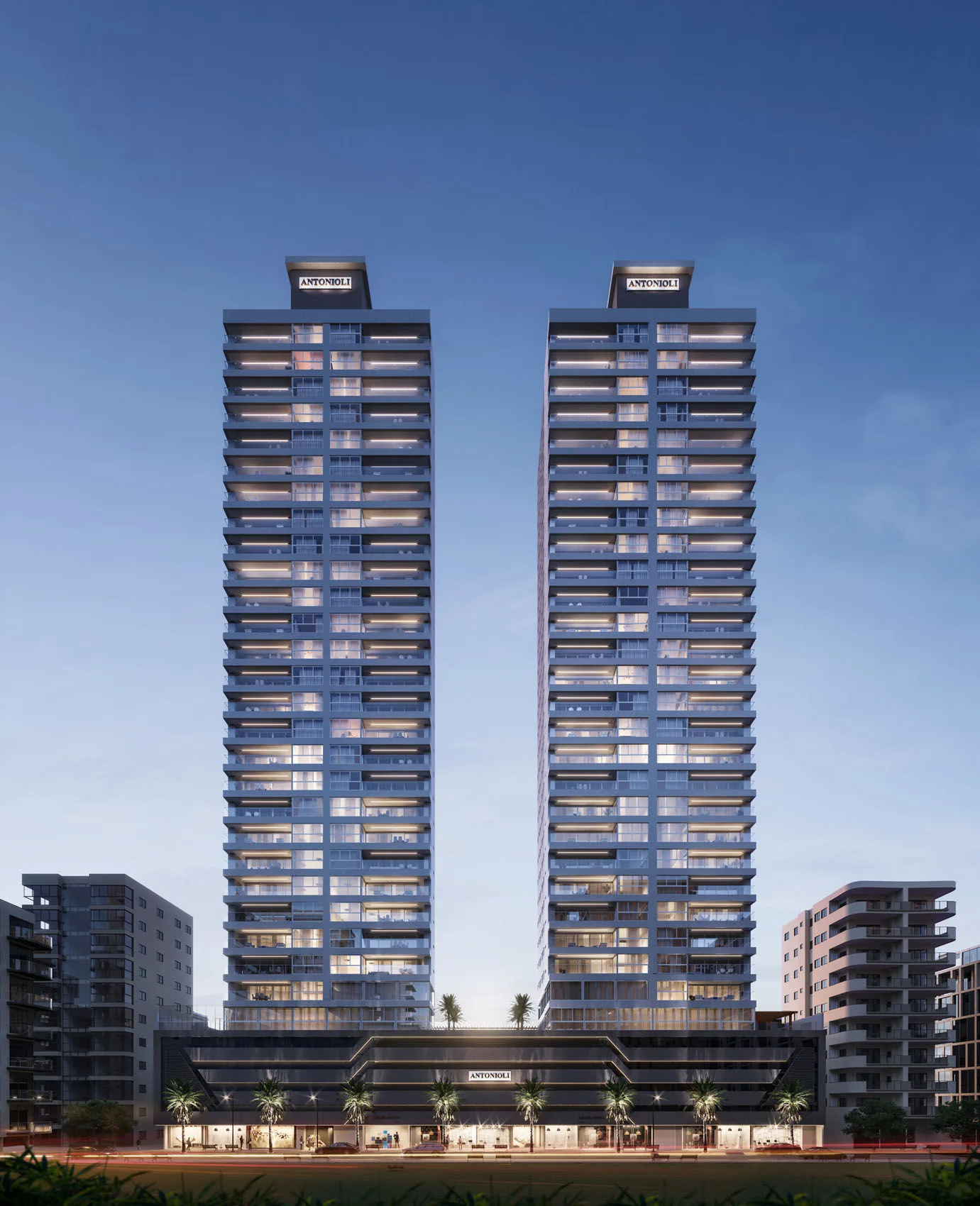
Prices vary sharply by neighbourhood. According to the Rocks integrated catalog (July 2026, directional aggregates from our own live inventory of roughly 130 Balneário Camboriú listings), Centro — the largest supply pocket — spans older stock from around R$0.9–1.2 million (≈ US$164,000–218,000) up to R$15.9 million, with a median near R$4.1 million (≈ US$745,000). Premium beachfront Barra Sul carries a median around R$11 million (≈ US$2.0 million) with entry near R$5.0 million. Pioneiros medians sit near R$3.6 million; Praia do Estaleiro near R$6.9 million; and the small, exclusive Barra Norte supply near R$12.9 million. Mainland bairros such as Nações and Perequê offer value entry points from roughly R$0.9–1.4 million. The trophy end — most visibly the Senna Tower pair — sits far above these medians and is a top-of-market outlier, not a benchmark.
Who is buying, and why?
Demand has two engines. The first is domestic: high-net-worth families from São Paulo, Curitiba and Porto Alegre have treated Balneário Camboriú as Brazil's premier coastal address for years, creating a price floor international buyers often underestimate. The second is international — American, British, Argentine and Gulf buyers drawn by the currency advantage and lifestyle. For USD, EUR or GBP holders, the weak Brazilian Real has historically opened purchasing windows, though the same volatility affects repatriation later. Buyers spending R$1 million or more on urban property may also qualify for permanent residency under Brazil's VIPER investor visa; see our Golden Visa guide for the current thresholds. Landmark projects like Senna Tower and One Tower keep the city's global profile — and its price ceiling — rising.
What are the main risks in 2026?
This is an emerging market, and honesty matters more than optimism. Most inventory is sold off-plan, so buyers carry construction and delivery risk; choosing established developers with a delivery track record mitigates but does not remove it. Liquidity is thinner than in mature global markets — resale can take longer, so BC suits a multi-year hold, not a quick flip. Currency volatility cuts both ways. And there is a genuine debate about supply: with cranes on every block, some analysts question whether the pace of new towers could soften prices in specific segments. None of this negates the opportunity; it frames it. The mitigations are practical: favour developers with a completion track record, plan a multi-year hold to ride out currency and liquidity, and weight location quality over marginal supply. Budget for closing costs and taxes and lean on local due diligence.
The takeaway
Balneário Camboriú in 2026 is a mature-feeling market on emerging-market fundamentals: strong historical appreciation, scarce land, deep domestic demand and a growing international audience — set against off-plan delivery risk, currency swings and a live over-supply debate. It is not a guaranteed win, and no one should treat it as one. For patient buyers who do their diligence, structure entry sensibly and hold through a cycle, the case remains compelling. Start by browsing live Balneário Camboriú listings, then map your own entry point against the numbers above.