

What is the cost of living for American families in Florianópolis, and where should they enroll their children in school?
A family of four in Florianópolis typically budgets $5,000–5,500 USD monthly for rent, international school, healthcare, and living expenses—significantly less than equivalent US coastal cities. Established English-language schools include Colégio Catarinense and Maple Bear, with tuition around $12,000–18,000 USD annually. Most expat families maintain private health insurance ($300–600 USD monthly) and live in neighborhoods like Lagoa da Conceição or Canasvieiras, which rank among Brazil's safest areas. Currency risk remains real—families with USD income are financially protected, while those relying on BRL conversion should structure purchases carefully.
Florianópolis for American Families: The Unfiltered Guide
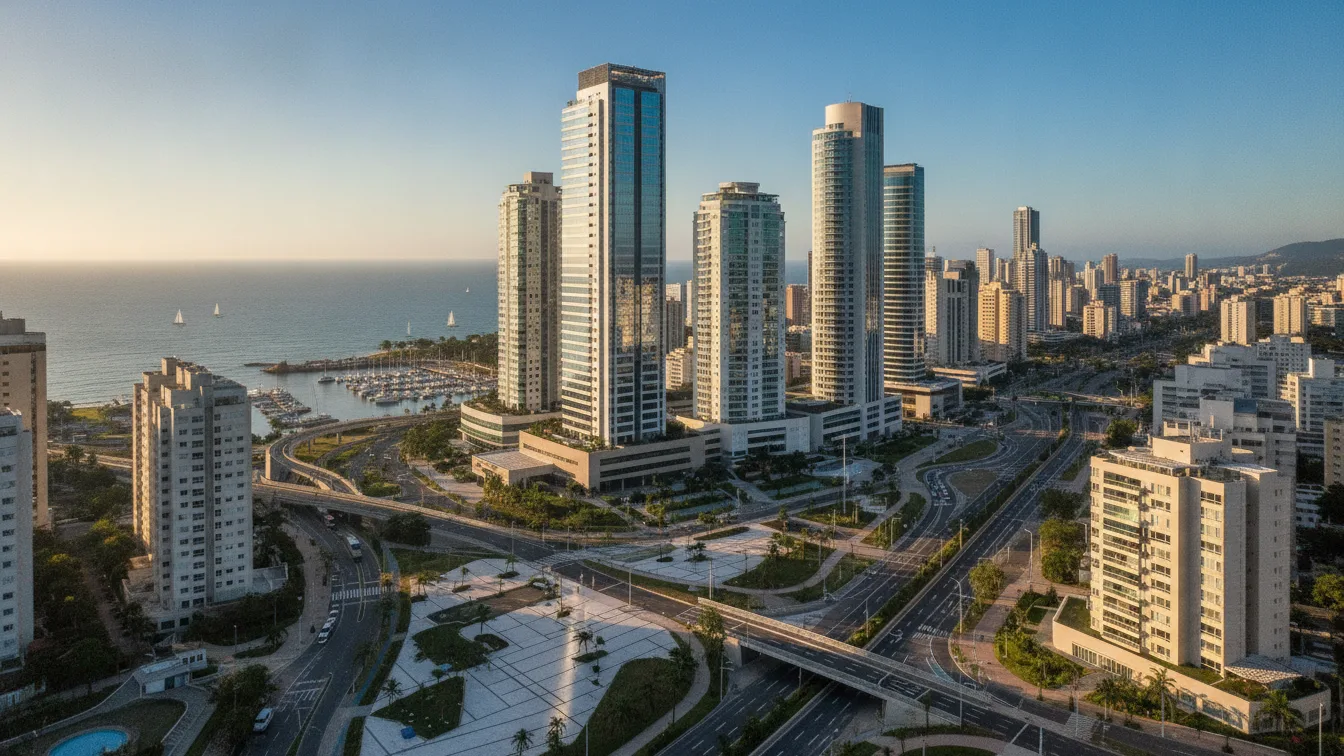
Let me put this in perspective. A family of four living the beachfront lifestyle in Miami's top neighborhoods spends roughly $8,000–12,000 USD monthly on rent alone. In Florianópolis, that same family—in a modern, beachfront apartment with ocean views—pays $1,500–2,500 USD ($7,500–12,500 BRL) monthly. But "cheaper" is only part of the story. I'm seeing a real migration of American families here, and it's not just about the savings. It's about the life structure that money actually buys.
The Real Cost of Raising Kids Here
International schools are the first question I hear from parents. Florianópolis has two established English-language options serving expat families: Colégio Catarinense (strong IB curriculum) and Maple Bear (Canadian-style education). Annual tuition runs $12,000–18,000 USD ($60,000–90,000 BRL) per child—comparable to mid-tier US private schools but significantly less than elite international programs in São Paulo or Rio. Both schools have robust sports facilities and summer programs, and your child will study alongside Brazilian, European, and American families, which is a genuine advantage for global fluency.
For elementary-aged children, the quality delta between international and local public schools is notable. I advise families not to outsource that decision lightly. If international school is essential for your family's timeline, budget accordingly. If you're comfortable with local Portuguese-language education (which improves dramatically after age 7), you unlock different financial flexibility.
Healthcare & Safety: What Expat Families Actually Prioritize
Here's what the data actually shows: Florianópolis ranks among Brazil's safest cities by crime rate metrics, with several neighborhoods (Lagoa da Conceição, Bom Abrigo, Canasvieiras) seeing negligible violent crime. That doesn't mean complacency—it means your family's risk profile is genuinely lower than São Paulo or Rio. Most expat families maintain private health insurance (roughly $300–600 USD monthly per family) through providers like SulAmérica or UNIMED, which covers top hospitals including Hospital Angelina Malik and Hospital Homeopático. I've not met an American family here without private coverage, and I'd advise the same.
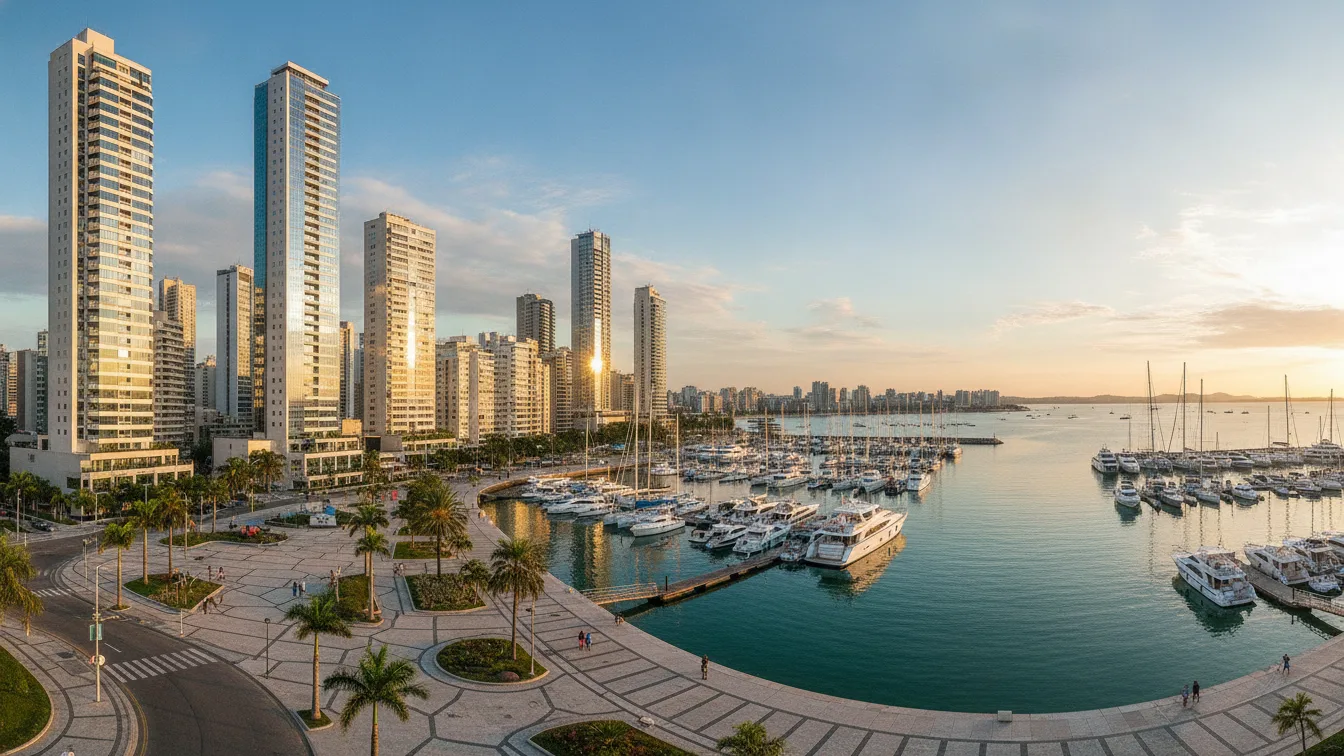
The beaches themselves are genuinely family-friendly. North Island beaches (Canasvieiras, Bombinhas) have calm waters and lifeguards December–February. South Island beaches (Lagoa da Conceição lagoon, Campeche) offer protected bay conditions. We're not talking Malibu—water temperature runs 68–79°F (20–26°C) year-round, so wetsuits are practical for winter months. The lifestyle isn't aspirational marketing; it's structural. Your kids walk to school on tree-lined streets, swim year-round, and develop independence that urban US kids often don't until much later.
The Hidden Costs Nobody Mentions
Breaking down a realistic family budget: rent ($2,000 USD), international school ($15,000 USD annually, or $1,250 monthly), household staff (nanny/cleaner, $400–600 USD monthly), private health insurance ($400 USD), groceries and dining ($800 USD), utilities and internet ($150 USD), transport ($300 USD). You're looking at roughly $5,100 USD monthly for a comfortable, not-luxurious expat family lifestyle. Equivalently, that's $25,500 BRL monthly—which is manageable on a remote US salary and genuinely impossible to replicate in Miami, the Hamptons, or coastal California.
The currency risk, however, is real. If the BRL weakens against the USD (as it has over the past 18 months), your costs in real US dollar terms rise. Families with USD income are protected; families with BRL income or retirees converting Social Security face headwinds. This is why I counsel families to structure property purchases through USD-denominated trusts or international LLC vehicles—your cost basis stays anchored while you live in local currency.
Lifestyle Factors: The Intangibles
I've seen this pattern before—in Manhattan, in Miami, and now here. Families arrive expecting coastal luxury at discount pricing, and many discover that the real value is rhythm. Florianópolis closes down on Sundays. Business culture moves differently. Your kids' school calendar doesn't align with US holidays. These aren't obstacles if you're intentional; they're profound structural changes if you're not.
American families I advise here report higher family engagement (kids walk independently), lower screen time (beach culture is structural, not aspirational), and significantly reduced stress around housing costs. Parents have bandwidth to invest in relationships and community, which often doesn't happen when 60% of income goes to rent.
The Property Question: Buy or Rent?
Most families I work with rent for 12–24 months before deciding to purchase. That's sound strategy—it lets you discover which neighborhood actually works for your lifestyle, not for Instagram. If you do purchase, a family-sized apartment (2–3 bedrooms, beachfront or lagoon-view) typically costs $250,000–450,000 USD ($1.25M–2.25M BRL), which qualifies for Brazil's Golden Visa at the $200,000 USD threshold. Rental yields on family properties run 4–6% net, depending on seasonality—attractive enough for portfolio diversification but not a standalone investment thesis.
The arbitrage window won't stay open forever. As more US families discover Florianópolis, both rents and purchase prices will normalize upward. If you're considering this move, the time to research seriously is now—not in three years when pricing has shifted.
Your Next Step
If you have school-age children and you're genuinely exploring this lifestyle, I'd recommend a structured reconnaissance visit: two weeks, rent a temporary apartment in your target neighborhood, enroll kids in a trial school program, and assess whether the rhythm works for your family. Don't make this decision from a spreadsheet. But once you've validated the lifestyle fit, the financial case becomes much clearer. Schedule a portfolio review call to discuss structuring strategies, school selection criteria, and what a realistic 5-year timeline looks like for your family.